What Is SMS Marketing for Restaurants? (Examples, Benefits, and Best Practices)
Most restaurants don’t have a messaging problem. They have a disconnected marketing system. Here’s how SMS works best when it’s part of something bigger.
SMS marketing, aka texting, is a great way to communicate timely messages to your audience. As part of a connected marketing system, it becomes even more effective.
Text messages see open rates near 98%, making them ideal for time-sensitive promotions
Restaurants that rely on disconnected tools struggle to stay consistently top-of-mind
The most effective SMS campaigns are short, relevant, and triggered by real guest behavior
A connected restaurant marketing system turns SMS into a reliable driver of repeat visits and revenue
SMS drives immediate action—but its real power comes when it’s part of a system that keeps your restaurant consistently top-of-mind.
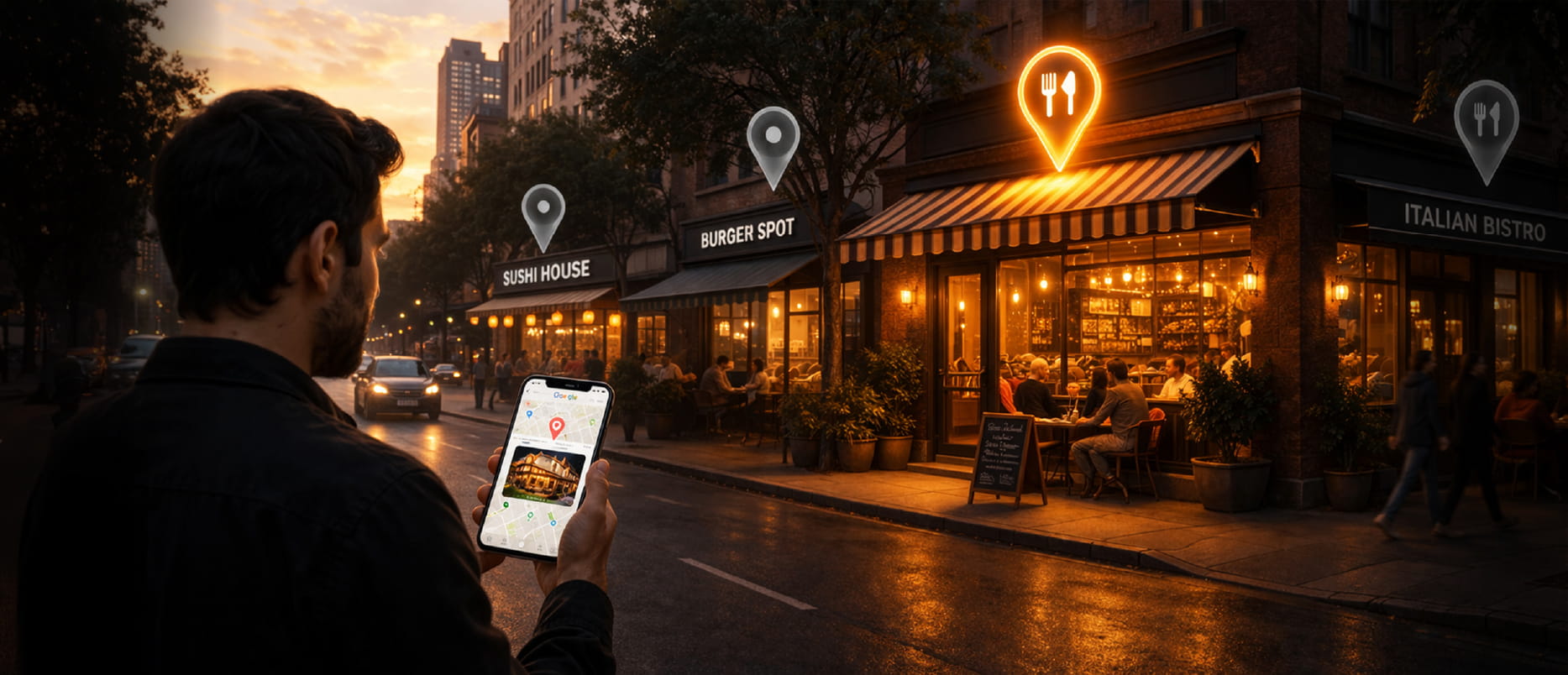
Most diners don’t consider every restaurant when deciding where to eat. They choose from the few places that come to mind first.
That list isn’t random. It’s shaped by which restaurants stay visible, stay relevant, and stay in touch.
If your restaurant isn’t top-of-mind, you’re not just being overlooked. You’re being replaced.
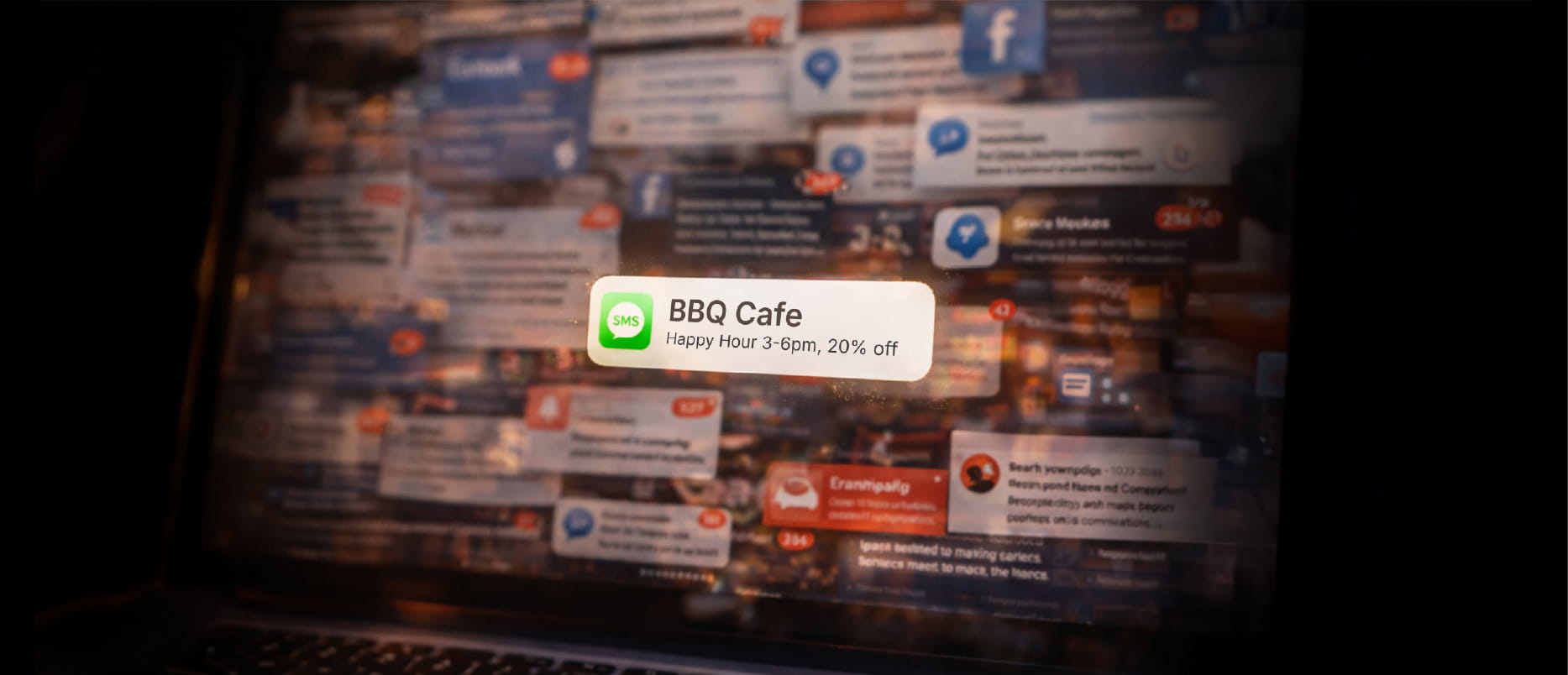
And here’s where most restaurants run into a problem. It’s not that they aren’t doing marketing. It’s because their marketing is disconnected.
An update to your website. A social post when there’s time. Maybe an email if you can squeeze it in before dinner service. Nothing ties together. Nothing builds momentum.
So even when you send a message, it doesn’t consistently change behavior.
That’s where SMS marketing comes in—and how it works as part of a larger marketing system.
What Is SMS Marketing for Restaurants?
SMS marketing for restaurants is the practice of sending text messages directly to guests’ phones to promote offers, events, reminders, and updates.
It’s one of the most powerful tools in your marketing mix because it is:
Immediate
Highly visible
Action-driven
Messages like:
“Happy hour starts at 4pm: 2-for-1 drinks today”
“Last-minute openings tonight—book now”
…don’t sit unread. They drive decisions.
Why Is SMS Marketing So Important?
Because when used correctly, it solves one of the hardest problems in restaurant marketing: staying top-of-mind.
Text messages have open rates near 98%, which means your message is almost guaranteed to be seen.
And more importantly, they arrive at the right moment:
When guests are deciding where to eat
When plans change
When availability opens up
How Does SMS Compare to Email Marketing for Restaurants?
Both channels matter—but neither works well alone.
Email marketing for restaurants:
Builds long-term awareness
Shares updates, events, and brand story
SMS marketing for restaurants:
Drives immediate action
Captures high-intent decisions
Here’s the mistake many restaurants make:
They treat these channels separately.
So instead of reinforcing each other, they compete for attention—or worse, operate inconsistently. The result? Guests hear from you sporadically, not predictably.
And predictable visibility is what builds top-of-mind awareness.
What Types of Messages Work Best for Restaurant SMS Marketing?
SMS works best when it’s:
Timely → tied to real-world moments
Relevant → based on guest behavior
Actionable → clear next step
Examples:
Flash promotions
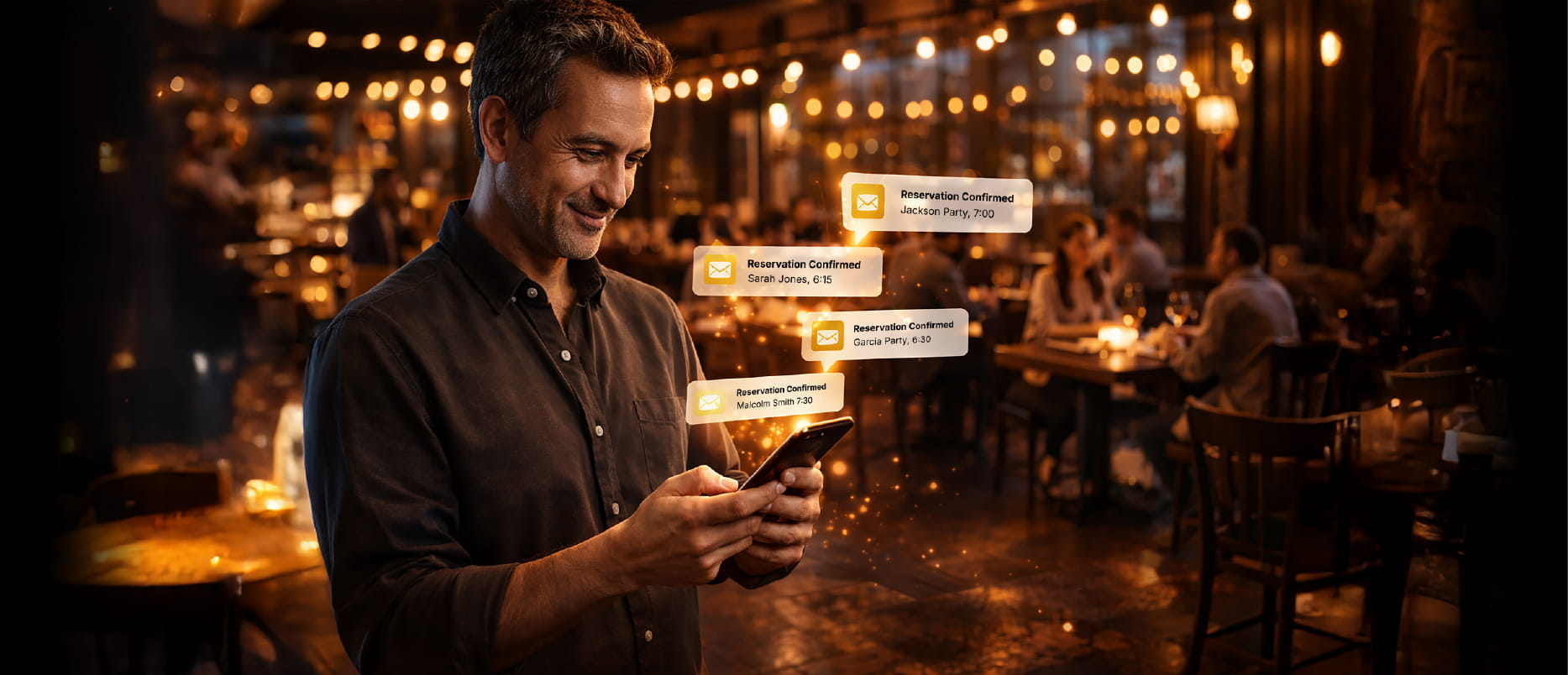
Reservation reminders
Loyalty rewards
Event announcements
But the real difference isn’t just the message.
It’s when and why it’s sent.
Without a marketing system, timing is guesswork. With a system, timing becomes strategy.
How Do You Collect Phone Numbers the Right Way?
The fundamentals still matter:
Offer clear value (discounts, perks, VIP access)
Capture numbers through your website and reservations
Set expectations for what guests will receive
But here’s the bigger opportunity: When phone numbers are part of a connected system, they become more than a list.
They become actionable guest data.
What Are Best Practices for Sending SMS Marketing Messages?
✔ Get clear opt-in consent
✔ Keep messages short and useful
✔ Time messages strategically
✔ Personalize when possible
✔ Avoid over-sending
These best practices don’t change. But what does change is how easy they are to execute consistently. Without a system, this requires effort. With a system, it happens automatically.
What Does It Look Like When SMS Is Part of a Marketing System?
SMS drives immediate action—but its real power comes when it’s part of a system that keeps your restaurant consistently top-of-mind. This is where things start to work differently.
Instead of sending one-off messages, your SMS marketing becomes:
Triggered by guest behavior
Synced with reservations and visits
Reinforced by email and other channels
Measurable and improving over time
Now SMS isn’t just outreach. It’s part of a coordinated engine that keeps your restaurant visible and relevant.
Restaurants using connected marketing systems see stronger repeat engagement because outreach is consistent and personalized—not manual and reactive.
How Can You Make SMS Marketing Work Without More Effort?
You don’t need more tools. You need a system. That’s the shift.
SpotHopper brings your:
Website
Email marketing
SMS campaigns
Guest data
Reviews and visibility
...into one connected platform.
So instead of managing marketing, you have a system that:
Keeps you top-of-mind
Reaches guests at the right moment
Drives repeat visits automatically
SMS becomes more powerful—not because it changed, but because it’s finally connected.
If you’re looking for a simpler way to run SMS marketing—and make it actually work as part of a bigger strategy—SpotHopper brings everything together in one system built for restaurants.
Book a demo to see how a connected marketing system can help you stay top-of-mind and drive more consistent guest traffic.
Frequently Asked Questions
What is SMS marketing for restaurants?
SMS marketing for restaurants is the use of text messages to send promotions, reminders, and updates directly to guests’ phones. It’s one of the most effective ways to drive immediate engagement and increase reservations.
How do restaurants use text message marketing effectively?
Restaurants use SMS marketing effectively by sending timely, relevant messages such as promotions, reservation reminders, and loyalty offers. The best campaigns are short, personalized, and sent at key decision-making times.
Is SMS marketing better than email for restaurants?
SMS marketing is not better than email—it serves a different purpose. SMS is best for immediate, time-sensitive communication, while email is better for longer-form content and ongoing engagement. The best strategy uses both together.
How do you collect phone numbers for restaurant SMS marketing?
Restaurants collect phone numbers through website sign-ups, in-store promotions, reservation flows, and incentives like discounts or rewards.
What are examples of SMS campaigns for restaurants?
Examples include flash promotions, happy hour alerts, reservation reminders, birthday offers, and event announcements. These campaigns work best when they are timely, concise, and action-oriented.
Keep learning about Restaurant Customer Retention
Restaurant SEO
Why Your Restaurant Isn’t Showing Up on Google (And How to Fix It Fast)
Restaurants that appear at the top of Google capture the majority of diners at the moment of decision, making search visibility—driven by SEO, reviews, and website quality—a direct driver of reservations, traffic, and revenue.
Restaurant AI Marketing + Restaurant Customer Retention
Email Marketing for Restaurants: How to Fill Slow Nights and Bring Guests Back
Email, as part of a connected marketing system, helps you stay top-of-mind, and fill slow nights without adding more work.
Email marketing is one of the best ways for your restaurant to keep in touch with customers, grow loyalty, and drive return visits.